OEM development
Custom hygiene products and private label OEM sourcing
Prepare a custom hygiene products brief. Plan the specification, sample review, pack proof and order split for private label period care, masks or travel kits.
Start an OEM enquiry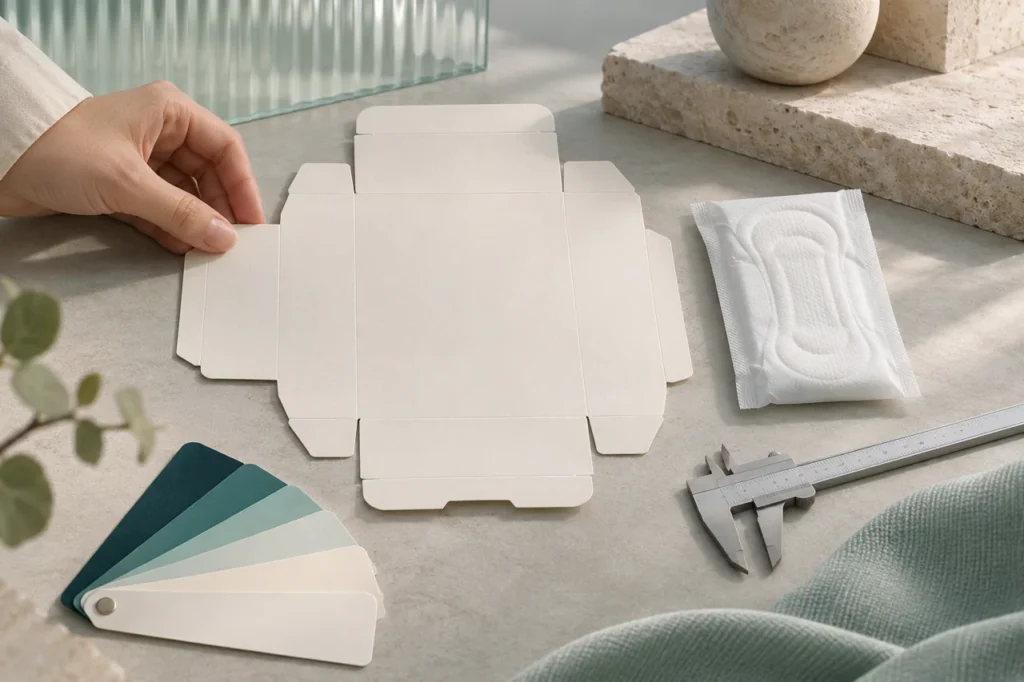
Decide what the supplier is being asked to change
A brand may be ready to print its own bag around an approved pad, or it may need to change the pad’s length, wing shape and wrapper at the same time. Both can begin as a private label enquiry. They call for different samples, different approvals and a different first-order calculation.
Start your enquiry to Rise Hygiene with the sales market and the product you want to put on the shelf. Our Hong Kong trading company uses that brief to frame sourcing discussions. Availability, sample arrangements, minimum quantities and lead time are confirmed against the requested specification.
Match the brief to the customisation
List what can stay as sampled and which details the buyer still has to approve. Use a separate row for each size, product format or artwork version.
| Project | Details to agree before quoting |
|---|---|
| Existing product in a branded pack | Approved product reference, count per pack, artwork language and print quantity per design. |
| Change to the product specification | Dimensions or material to change, elements to retain and the comparison required on a revised sample. |
| Several items in one retail kit | Component reference and quantity, size mix, who assembles the kit and identification on the outer pack. |
Keep product and packaging approvals together
For menstrual pants, link the garment sample to its size table. For pads and liners, identify the approved outline, surface and individual wrapper. For disposable briefs or general-use masks, retain the packed sample as well as an opened example. Give the artwork proof its own revision reference. The purchase order can then identify both the product and the pack that were approved.
For example, two markets might use the same liner in two different printed bags. A change in one translation calls for a new proof for that bag. Record whether the liner specification also changed so the sample reviewer knows what to check.
Make the first quotation comparable to a reorder
Request a breakdown of product quantity, packing quantity, one-time setup and any unconsumed printed material. If a supplier quotes a minimum per design, apply that minimum to each artwork version in the proposed order. Ask how unused bags are identified and held for a reorder, especially if the next print run may carry different wording.
Send the proposed order by variant, the named destination, the desired handover date and the decisions still open. A useful first reply identifies the sample to review, the details needed for pricing and the next approval the buyer can make.